
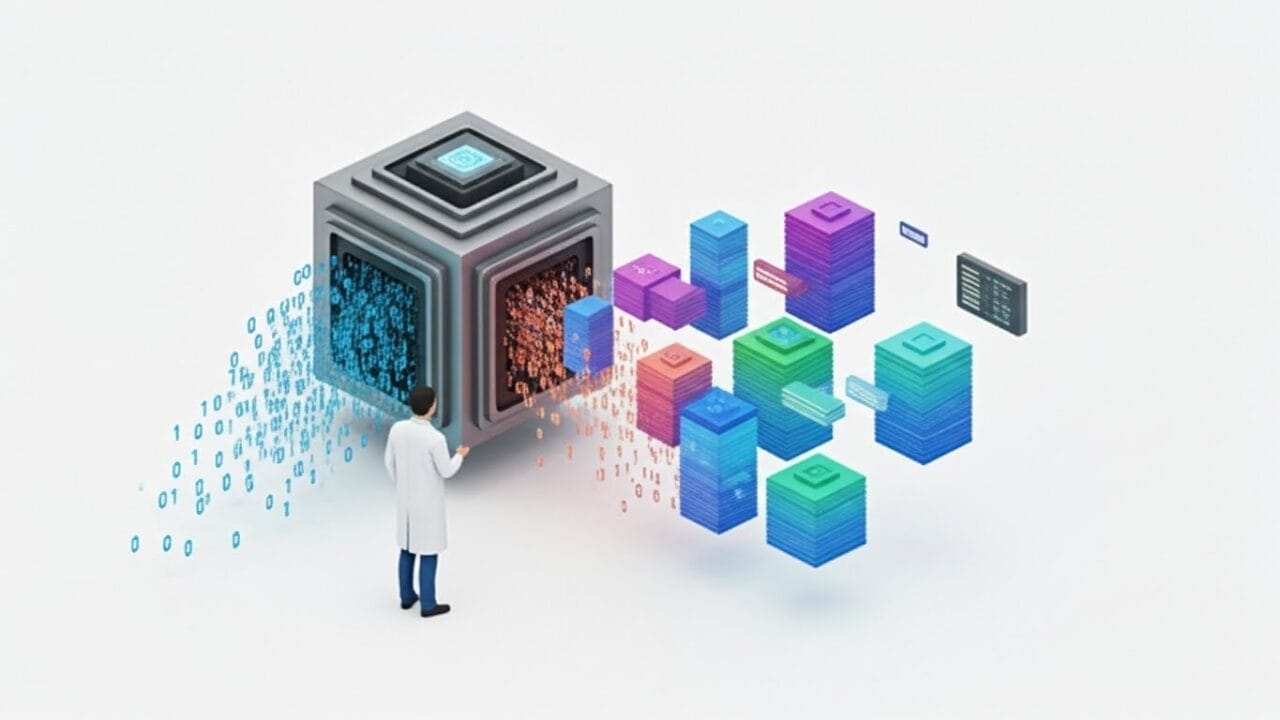
For GCE A/L ICT students in Sri Lanka, Lesson 1 serves as the critical foundation for the entire syllabus. This lesson moves beyond simple definitions to explore the “building blocks” of information and the systematic ways technology manages global data.
By integrating our LMS notes with the SchoolICT.net interactive learning tool, you can visualize the abstract transition from raw data to meaningful information.
1. Data and Information: The Building Blocks
The primary goal of an ICT system is to transform raw inputs into useful outputs.
- Data: Numbers, words, images, or symbols that do not bear a specific meaning when standing alone (e.g., “30”, “Celsius”, “Colombo”).
- Information: Data that has been processed, arranged, or organized to provide meaning and support decision-making (e.g., “The temperature in Colombo is 30 degrees Celsius”).
2. The Data Processing Life Cycle
Data doesn’t just become information instantly; it follows a specific cycle of activities:
- Data Collection: Gathering raw facts from various sources.
- Data Input: Entering gathered data into the system.
- Data Processing: Converting data into information through calculations, sorting, or classification.
- Data Storage: Keeping data or information for future use.
- Data Output: Presenting the processed information to the user.
- Communication: Exchanging this information among different people or systems.
3. Characteristics of Quality Information
Not all information is useful. For information to be effective for decision-making, it must possess certain quality characteristics:
- Accuracy: The information must be correct and free from errors.
- Relevancy: It must be applicable to the specific task or decision at hand.
- Timeliness: Information must be available when it is needed.
- Completeness: It should contain all the necessary facts to avoid wrong conclusions.
- Cost-effectiveness: The value of the information should be higher than the cost of obtaining it.
4. Components of an ICT System
An ICT system is a combination of components working together to fulfill a task. These include:
- Hardware: The physical components (CPU, Monitor, Keyboard).
- Software: The instructions that tell the hardware what to do.
- Data: The raw material for the system.
- People: The users and specialists who operate the system.
- Procedures: The rules and guidelines for using the system.
- Network: The communication infrastructure that connects systems.
5. Interactive Learning: Basic Concepts Tool
Abstract concepts like “data processing” are best learned through simulation. The SchoolICT.net Basic Concepts Tool provides an interactive environment to test these theories.
Features of the Tool:
- Data vs. Information Matcher: Drag random data points into a processing engine to see how they transform into specific pieces of information.
- Quality Checker: Evaluate different information samples based on accuracy, timeliness, and completeness to see their “Quality Score.”
- System Diagram Builder: Build your own system model by connecting Input, Process, Output, and Storage components in the correct order.
- Evolution Explorer: While part of Lesson 2, this tool also introduces the early mechanical tools like the Abacus that paved the way for modern electronic processing.
6. Applications and Impact of ICT
ICT is no longer just about computers; it is integrated into every part of modern society:
- e-Government: Providing government services and information to citizens via web portals.
- e-Health: Using technology for telemedicine and advanced medical equipment.
- e-Education: Accessing global resources and personalized learning experiences.
7. Exam Success Tips for A/L Students
- Definitions: Be prepared to define the “Abstract Model of Information” and distinguish between “Manual” and “Computer-based” information systems.
- GIGO Principle: Remember the “Garbage In, Garbage Out” concept—if the input data is invalid, the output information will also be invalid.
- Gold Standard: When asked for characteristics of information, always mention Accuracy, Completeness, and Timeliness first.
- Syllabus Awareness: The A/L syllabus emphasizes the “Activities of the Data Processing Life Cycle”—ensure you can list all stages in sequence.
Conclusion: The Foundation of Your ICT Journey
Lesson 1 is the lens through which you will view every other topic in the A/L ICT syllabus. Whether you are studying Networking or Programming, the core logic remains: how do we handle data to create value? Use the SchoolICT notes and interactive tools to solidify this foundation today.
Start your A/L journey:


Leave a Reply