
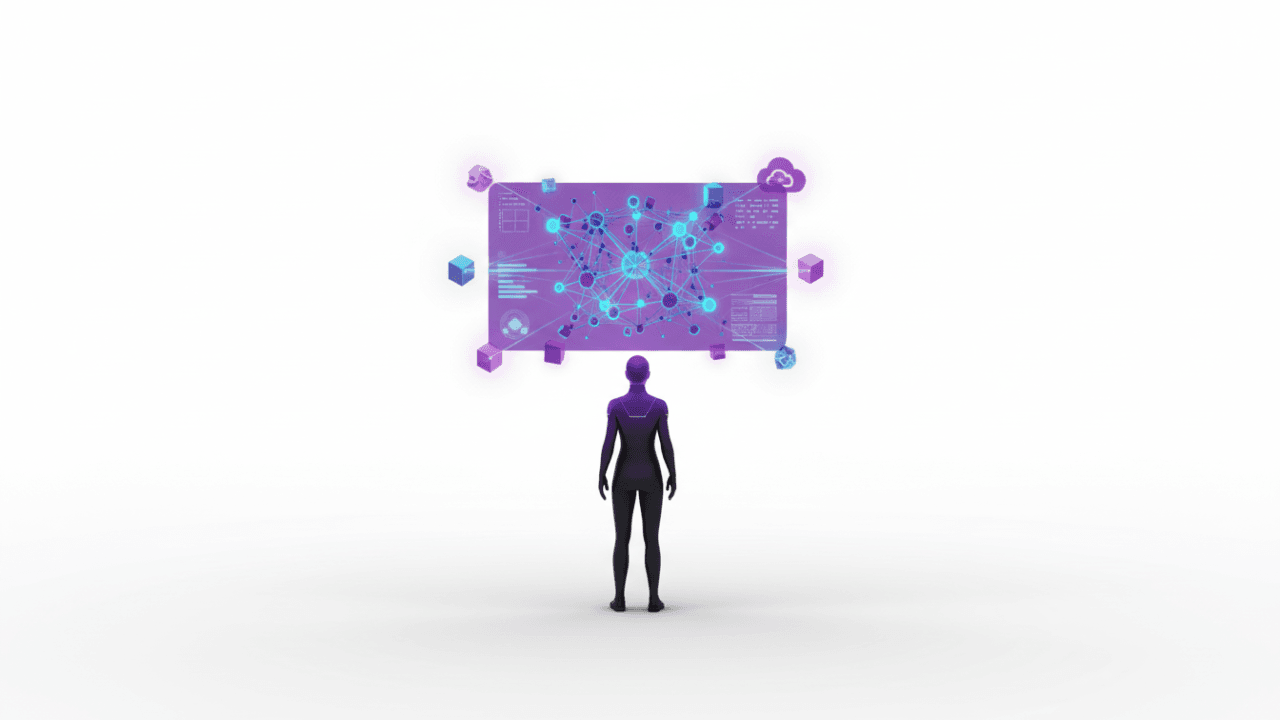
The field of ICT is evolving at an exponential rate. What was considered “cutting-edge” a few years ago is now standard technology. For GCE A/L ICT students, Lesson 13 is the final chapter, designed to provide a vision of the future. It covers emerging technologies that are reshaping society, from the way we store data to how machines think.
By combining the forward-looking notes from our LMS with the SchoolICT.net Future Trends Tool, you can explore the high-tech landscape of tomorrow.
1. Cloud Computing
Cloud computing is the on-demand delivery of computing services—including servers, storage, databases, and software—over the internet (“the cloud”).
Service Models:
- IaaS (Infrastructure as a Service): Renting raw hardware (e.g., Amazon Web Services, Microsoft Azure).
- PaaS (Platform as a Service): Providing a platform for developers to build apps (e.g., Google App Engine).
- SaaS (Software as a Service): Using software hosted on the web (e.g., Google Drive, Microsoft 365).
2. Artificial Intelligence (AI) and Machine Learning
AI is the simulation of human intelligence by machines, especially computer systems.
- Machine Learning (ML): A subset of AI that allows systems to learn and improve from experience without being explicitly programmed.
- Natural Language Processing (NLP): Enabling computers to understand and respond to human language (e.g., ChatGPT, Siri).
- Expert Systems: Programs that mimic the decision-making ability of a human expert in a specific field (e.g., medical diagnosis systems).
3. Big Data Analytics
Big Data refers to extremely large data sets that are too complex for traditional data-processing software. It is characterized by the 4 Vs:
- Volume: The sheer amount of data generated.
- Velocity: The speed at which new data is generated and moves.
- Variety: The different types of data (text, video, sensor data).
- Veracity: The messiness or trustworthiness of the data.
4. Mobile Computing and Ubiquitous Computing
- Mobile Computing: Technology that allows transmission of data, voice, and video via a computer or any other wireless-enabled device without having to be connected to a fixed physical link.
- Ubiquitous Computing (Pervasive Computing): A concept where computing is made to appear anytime and everywhere. Unlike desktop computing, ubiquitous computing can occur using any device, in any location, and in any format (e.g., smart wearables, smart environments).
5. Other Emerging Technologies
- Grid Computing: A collection of computer resources from multiple locations to reach a common goal (like a “supercomputer” made of many smaller ones).
- Quantum Computing: Using quantum-mechanical phenomena to perform calculations much faster than today’s most powerful supercomputers.
- Blockchain: A decentralized, distributed ledger technology that records transactions across many computers (the foundation of Bitcoin).
6. Interactive Learning: Future Trends Tool
Emerging technologies can feel like science fiction. The SchoolICT.net Future Trends Tool makes these concepts tangible.
Features of the Tool:
- Cloud Architecture Simulator: Drag and drop components to see the difference between Private, Public, and Hybrid cloud setups.
- AI Training Lab: Teach a simple virtual “agent” to recognize patterns and see how Machine Learning accuracy improves with more data.
- Big Data Visualizer: Interact with a massive stream of “Social Media Data” to see how algorithms extract “Trending Topics” and user sentiment.
- Future Tech Quiz: Test your knowledge on the latest breakthroughs in 5G, Bio-computing, and Nanotechnology.
7. Social and Ethical Implications
The future of ICT isn’t just about faster chips; it’s about the impact on humans:
- Job Displacement: Automation and AI taking over manual and repetitive tasks.
- Surveillance and Privacy: The ethical concerns of constant tracking via ubiquitous devices.
- Deepfakes: The challenge of distinguishing between real and AI-generated media.
8. Exam Success Tips for A/L Students
- Service Models: Be ready to distinguish between IaaS, PaaS, and SaaS using real-world examples.
- 4 Vs of Big Data: Ensure you can name and explain all four characteristics. This is a very frequent question.
- Agent Systems: Understand that an “Intelligent Agent” is an autonomous entity which observes through sensors and acts upon an environment using actuators.
- Expert Systems: Remember the three main parts: Knowledge Base, Inference Engine, and User Interface.
Conclusion: Preparing for the Unknown
Lesson 13 is not an ending, but a beginning. It invites you to think critically about the world you will help build. By mastering these trends, you position yourself at the forefront of the digital revolution. Use our LMS notes to stay updated and the interactive tool to explore the possibilities of tomorrow.
Ready to step into the future?


Leave a Reply